





Book Of Ra Magic

Book Of Ra Magic Buy Bonus Demo Test

Start in practice mode, check stakes, pace and breaks - and play today in Germany from 18+ only with clear limits.

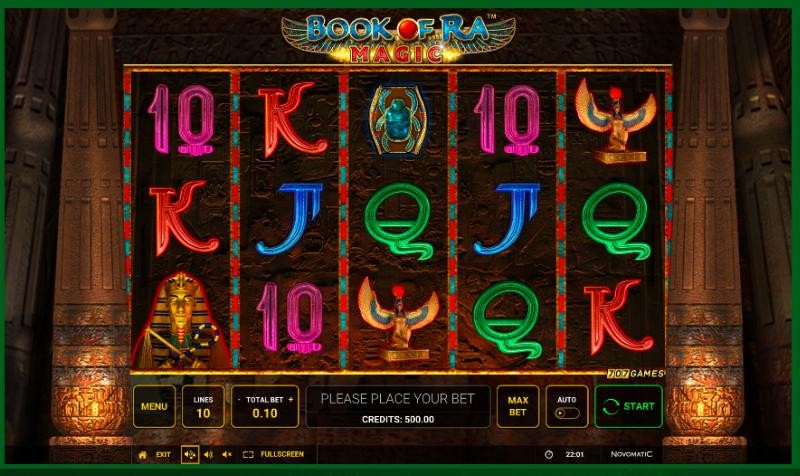
Book Of Ra Magic demo
demo image 1
Book Of Ra Magic

Book Of Ra Magic Slot Demo - How To Start Safely

A clean start feels unspectacular – and that's exactly a good thing. Imagine you have just 15 minutes and only want to see if the operation and rhythm suit you. First, quiet your surroundings: turn off notifications, lower the volume, position your phone or mouse so you don't constantly have to reposition your grip. Then, open the game rules and look for two things: where to adjust your bet and how to end an automatic function (if offered). Many players only discover these switches when they urgently need them – and by then, they're already playing on autopilot.

The practice mode is ideal for learning click paths, not for “chasing results”. Start with a small test bet (virtual), play a short series, and stop deliberately. After stopping, ask yourself: Can I explain what I just did? If the answer is more like “it somehow worked,” reduce the pace. This way, the test doesn't feel like an endless loop, but rather a quick check.

Also pay attention to what makes you go faster: sound effects, quick animations, the reflex to “just quickly do another round”. Imagine you're playing tired in the evening and notice that you click again immediately after every move. In such a moment, a higher bet won't help, but a break will. Stand up briefly, get some water, come back – and then decide if you really want to continue.

Book Of Ra Magic

Demo Book Of Ra Magic - What You Should Check

When trying it out, it's not the nice moments that count, but the small details. Imagine switching from desktop to smartphone and suddenly everything feels tighter, faster, more cluttered. That's exactly what you want to find out during the test run: How clear are the displays, how accurately do you hit spin and stop, and how well can you find your way back to the rules menu if you want to look something up? Answering these questions early saves you stress later.

A helpful approach is to always change only one thing at a time. First the pace, then the series length, then the bet range. If you adjust everything simultaneously, you won't know in the end what made the difference. It's better to play two short blocks instead of one long session. Imagine you take a break after 25 spins and only then start a second block. Often, after the break, you immediately notice whether you're still curious or just want to “keep going”.

Also observe your behavior during quiet phases. Many players become impatient when nothing notable happens for a while and start to “optimize”. In a test run, you can consciously practice this: remain consistent, read displays, set stops. You are not training luck, but control. And control is the part that truly matters in real money mode – especially if you are playing in Germany and want to consciously manage your time and budget from 18+.

Book Of Ra Magic

Book Of Ra Magic Demo Slot - Functions at a Glance

Functions often seem like a promise, but they are primarily mechanics that you should understand. Imagine seeing a striking symbol or animation and feeling the urge to play faster immediately because “something could happen soon”. This is exactly where a quick rules check is worthwhile: not to force something, but to know what is even possible. If you know how special characters are described and what hints the game gives, you need less gut feeling – and make better decisions.

In test mode, you can build a small routine: first read the rules, then a short series, then stop. After that, open the rules again and check if you've really understood the terms. Imagine you had to explain to someone why a special function was just triggered. If you start guessing, play slower and look more closely. That's not “being too cautious”, but being thorough.

Book Of Ra Demo Magic - Quick Test Without Rushing

If you only want to test briefly, make the test short – really short. Imagine you're on a break at work or waiting somewhere and want to “just play quickly”. Then set a fixed number of spins, for example, one block, and end it even if it seems exciting. The point is not to “hit something”, but to find out if the game's pace quickly draws you in.

Stick to a clear sequence: set your bet, ten to twenty spins, stop, read the display, done. If you immediately feel the urge to add another block afterwards, take that as information. This very impulse is the moment in real money mode when many boundaries shift. In test mode, it's the perfect time to practice taking a break.

Manage Bet, Pace, and Autoplay Clearly

Pace is not just comfort, it's control. Imagine you click faster because it's smooth, and after a few minutes, you no longer know how many spins you've made. Then the pace is too high. Reduce speed or consciously play in series that you briefly interrupt after each round. The test is successful if you can always explain why you are continuing to play – and can stop just as easily.

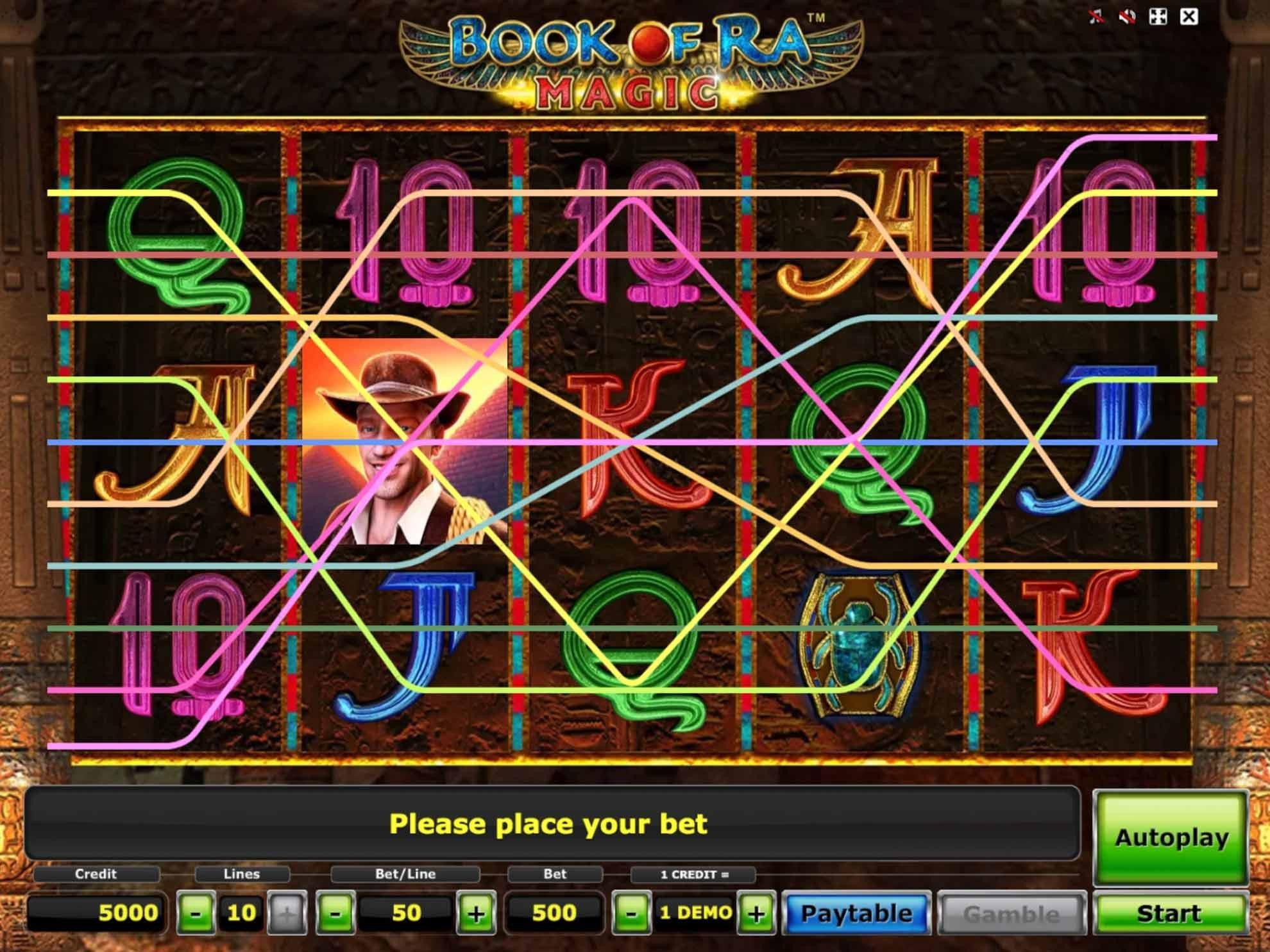
If an automatic spin function is available, use it only as a tool, not as continuous operation. Imagine you activate autoplay and glance at your phone – suddenly, many spins run through without you truly being present. Set a small number, stay attentive, and end the function yourself. As soon as you realize you're “just watching”, it's time to stop.

demo image 2
Book Of Ra Magic

Buy Bonus Feature and Understand Risk

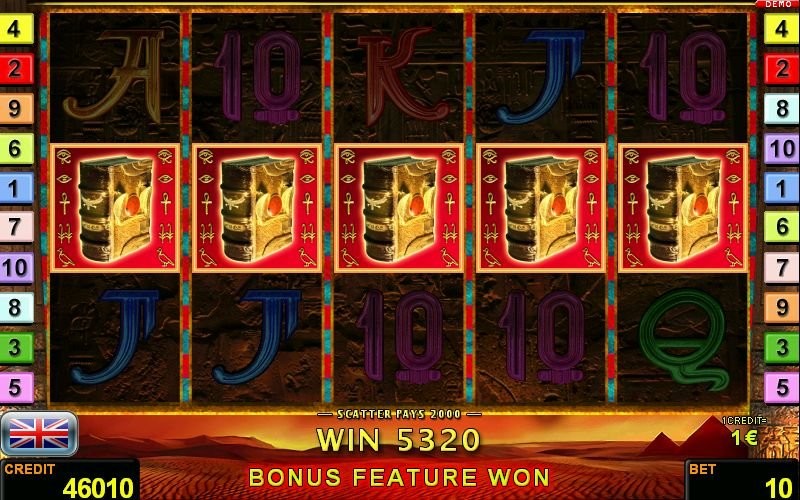
A purchased bonus phase can feel like fast-forwarding – and that's exactly where many lose their sense of budget. Imagine you're curious, want to see the feature round, and click spontaneously. Suddenly the session is more intense, faster, more expensive, and you make decisions out of excitement rather than a plan. If you test such an option, do so only with a clear structure: try it once, then immediately pause, then decide if you even want to continue.

The most important part is not what “comes out”, but how you behave. Do you become restless? Do you want to repeat immediately? Do you feel pressure to get something back? These signals are more valuable than any single result. In Germany and from 18+, the goal is for you to control the game – not for the game to push you into the next round.

How Feature Purchase Usually Works

In many slots, it works similarly: You find the option in the menu, confirm the price, and start directly into a special game phase. Imagine you just want to “see” what free spins look like, without waiting long. Then the purchase seems like a convenient shortcut. That's precisely why you should pause briefly before clicking and check your budget: Does this fit into the session, or is it actually already too much?

Test the purchase like a laboratory experiment. After starting, don't immediately continue, but stop, read displays, and check if you are still calm. If you then have the urge to repeat immediately, that's a clear indication: don't double down, but pause. The best protection is to remove the decision from the excitement.

When An Option Can Be Locked

Sometimes you don't see the purchase function at all, or it's not available. Imagine you've read about it or someone shows it to you, but it's missing for you. This can be due to provider settings, the device, or regional regulations. Important: Don't search for it forever and don't make it a goal. The slot works fine without a shortcut, and for a meaningful test, the normal process is often even better.

If a function is missing for you, first go through the basics: open rules, check the menu, change devices. If it remains absent, accept that as a framework condition and focus on what you can reliably control: bet, pace, series length, breaks. These are the adjustment screws that truly matter later.

Mini-Plan For A Test Purchase

If you want to try it out, give yourself a mini-plan that protects you. Imagine you have a fixed test budget today and don't want to fall into repetitions. Then you do: a short normal series, one feature purchase, immediate stop, pause, and then finish or return to normal mode – but only if you still feel calm.

The last step is important: end, not “just quickly”. If you notice that you're playing more emotionally after the test purchase, that's the perfect time to close the session. A time-out here is not an “emergency button”, but a clean decision before you get carried away.

Book Of Ra Magic

Top casinos for playing Book Of Ra Magic - current list

ALF Casino

ALF Casino

Mafia Casino

Mafia Casino

SG Casino

SG Casino

Retro Bet

Retro Bet

leovegas

LeoVegas

Book Of Ra Magic

Payments, Limits, and Support In Germany

With real money, a game also becomes a process: account, deposit, withdrawal, limits. Imagine you want to play relaxed in the evening, but an extra step appears in the middle of the session and you become restless. This happens especially when setup and session are mixed. Do it separately: first set up, then play. In Germany, 18+ applies, and responsible gaming practically means that you plan your time and budget before you start.

To avoid having to improvise in everyday life, a small overview of which adjustment screws you can typically use helps. It doesn't replace rules, but it makes it clear where you build control – without having to deceive yourself.

Area

What You Set

How It Helps You

Session Duration

Timer or Time Limit

You stop before autopilot starts

Deposit

Daily or Weekly Limit

You prevent spontaneous top-ups

Reality Check

Reminders during the game

You see time instead of feeling

Break

Time-out for hours or days

You decouple frustration from clicks

Exclusion

longer exclusion

You get distance when needed

Support

clear problem note

You resolve issues without rushing

Registration and Age Check Without Stress

Complete the account opening when you have time, not between two appointments. Imagine you want to start “just quickly” and hastily type in data. Later, something doesn't fit, and leisure time turns into corrective work. Take a quiet window of time, enter information carefully, and plan that checks may vary depending on the provider. This is normal and no reason to feel pressured.

If you notice that you're becoming impatient during setup, that's a signal. Not: “do it faster,” but: “continue later.” The test mode isn't going anywhere. Your calm is more important than a quick start.

Depositing With a Plan Instead of Mood

A deposit is a budget decision, not a ticket to excitement. Imagine you had a bad day and want to click away your worries. Then there's a high risk of betting too much and feeling pressured afterwards. Do it differently: set a session budget, set a timer, and accept the money as entertainment costs – with no expectation of “getting it back.”

A clear stop line is helpful: when the budget is reached, it's over. No exceptions. If you win, secure a portion and stop earlier instead of re-wagering everything. This may seem unspectacular, but it prevents your game from being driven by emotion.

Withdrawal Without Urgency

Withdrawing is a process, not a magic button. Imagine you want to secure everything immediately after a good session, but a step is missing and you become frantic. That's exactly when misclicks happen. Stop, read the message, work step by step. And generally plan so that you are never dependent on a quick withdrawal. Entertainment should not depend on “I need the money tomorrow.”

If something is stuck, support helps most when you are specific: device, which step, which message. No long stories, no anger. The clearer you describe what you see, the faster you will get a useful answer.

Limits, Time-Out, and Self-Exclusion as Tools

Limits are not morality, but mechanics. Imagine you feel the impulse after a dry spell to increase your stake or “quickly” add more. If a limit is in place, the decision has already been made. You don't have to be strong; you just have to set it beforehand. Reality checks help because they make time visible, and time-out helps because it takes you out of the moment.

Self-exclusion is useful if you need a longer break or notice that you repeatedly get under pressure. This is not a drama, but a clear decision for peace of mind. In Germany, it is normal to use such functions before things become unpleasant - not just afterwards.
demo image 3

Conclusion: Test Calmly, Stop Clearly

A good test run is short, structured, and honest. Imagine you don't want to “play as much as possible” today, but rather find out if the rhythm, interface, and functions suit you. Then you play in blocks, take breaks, read rules, and end the session as soon as you notice that you are clicking faster or pressure is building. That's how it remains entertainment.

If you switch to real money, follow the same procedure: limits first, set a budget, set a timer, plan a break. In Germany, 18+ applies - and responsible gaming primarily means that you can stop at any time without having to prove anything to yourself.

FAQ

What's the best way to start the free test mode?

Make the environment quiet, open the rules, and then play only a short block instead of clicking for a long time right away. Imagine you only have 15 minutes - then a clear process with a stop and a break is enough. If you're still curious after that, start a second block only after a short interruption.

How do I know if I'm playing too fast?

If after a few spins you can no longer say why you're continuing, or if you barely read any messages. Imagine you're just clicking to the rhythm of the animations - then you're on autopilot. Reduce your pace, play shorter sessions, and incorporate fixed breaks.

Should I try a purchased bonus phase immediately?

Only if you have set a budget and a clear stop rule beforehand. Imagine you click out of curiosity and then want to repeat immediately - then the excitement has won. It's better to: test once, immediately take a break, then consciously decide whether to return to the normal routine or end the session.

Which limits help me the most at the beginning?

A time limit per session and a deposit limit per period are the strongest start, supplemented by in-game reminders. Imagine losing track of time, even though you only wanted to play 'for a bit' - a timer immediately ends that discussion. If you want to top up, a time-out is often the cleanest brake.

What do I do if I want to keep playing after losses?

End the session and take a break before deciding again. Imagine you think 'I'll get that back' - that's pressure, not a plan. Step away from the screen for a moment, take a deep breath, and only restart later when you are calm again.

How do I use support without getting annoyed?

First, stop, briefly note down the device, step, and message, then write a concise description. Imagine you keep clicking in anger - then it becomes unclear what is cause and what is effect. Objectivity saves time and gets you to a solution faster.

When is a longer break or self-exclusion advisable?

When playing no longer feels like leisure, but like an obligation, pressure, or an attempt to control a feeling. Imagine you want to stop, but you can't cleanly - then distance is the best decision. A time-out or self-exclusion takes away the daily discussion and gives you peace of mind again.

Play Now
🇬🇧 English